Uncle Sam Calls…Again!
Season 2, Episode 4
Guest: John Gurda
John Gurda (born June 9, 1947) is a Milwaukee native whose writing and research have shaped how the city understands its own past. Over several decades, he has published more than twenty books exploring Milwaukee’s neighborhoods, industries, and cultural evolution, with The Making of Milwaukee becoming both his signature work and the foundation for an Emmywinning Milwaukee PBS documentary. Beyond his books, Gurda has long been a familiar voice in the Milwaukee Journal Sentinel, where his columns interpret local history with clarity and accessibility. He holds degrees from Boston College and the University of Wisconsin–Milwaukee, including an honorary doctorate recognizing his contributions. Widely regarded as Milwaukee’s leading public historian, Gurda is known for helping people see how the city became what it is today.
We’re grateful to have him on the podcast — his insight, generosity,
and thoughtful storytelling make him an exceptional guest.
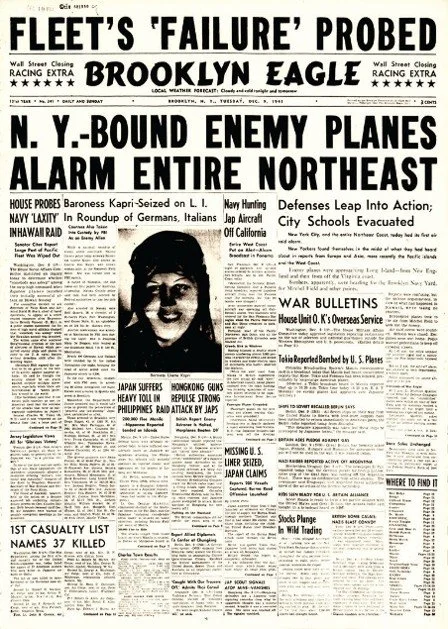
Brooklyn Eagle, December 9, 1941
Published the morning after New York’s air‑raid scare, this front page captures the city’s first hours of wartime anxiety. Sirens, false reports of approaching aircraft, and hurried civil‑defense mobilization left New Yorkers on edge as the nation adjusted to life after Pearl Harbor.
The St. Regis Hotel in 1941 — Elegance with a Whisper of Espionage
In 1941, the St. Regis Hotel was one of Manhattan’s most refined addresses, known for its marble lobby, polished service, and the famous King Cole Bar. But beneath the glamour, the hotel carried a quiet thread of wartime intrigue. Its owner, Vincent Astor, was not just a society figure — he was a close friend of President Franklin D. Roosevelt and had recently taken on a formal role in U.S. Navy intelligence.
That appointment meant the St. Regis became an informal crossroads for early wartime information. Diplomats, foreign visitors, military officers, and well‑connected New Yorkers passed through the same lobby, often unaware of who else might be listening. Conversations over cocktails or dinner sometimes carried more weight than the speakers realized.
The hotel’s atmosphere in the days after Pearl Harbor reflected this mix of luxury and quiet vigilance. Staff and guests felt the shock of the nation’s sudden entry into war, and the St. Regis — polished, calm, and discreet — became a place where society life and the earliest stirrings of America’s intelligence world briefly overlapped.
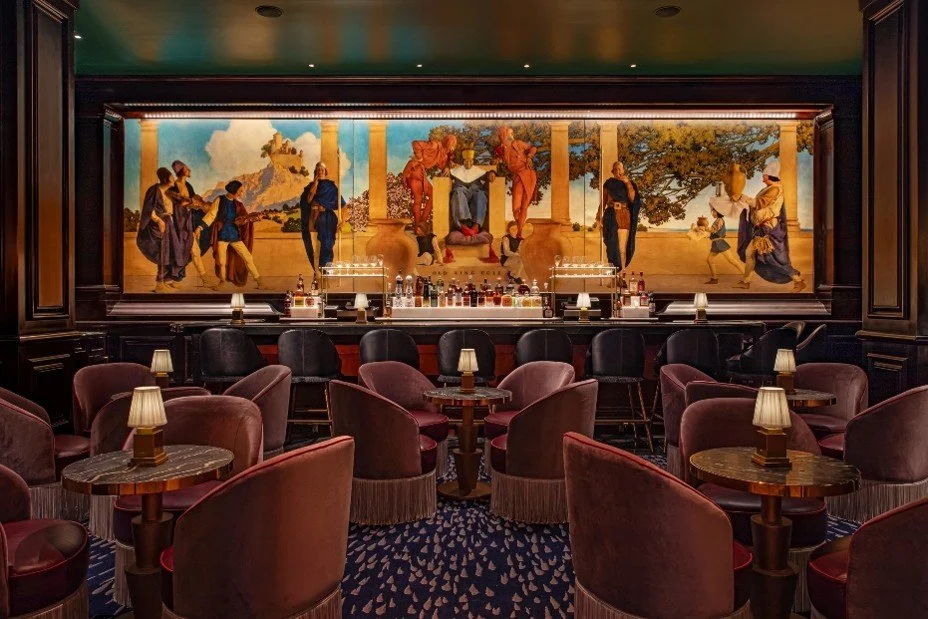
King Cole Bar, St. Regis Hotel
The legendary Maxfield Parrish mural presided over one of Manhattan’s most elegant gathering places in the early 1940s, a room where diplomats, actors, and society figures mixed beneath its luminous, whimsical glow.
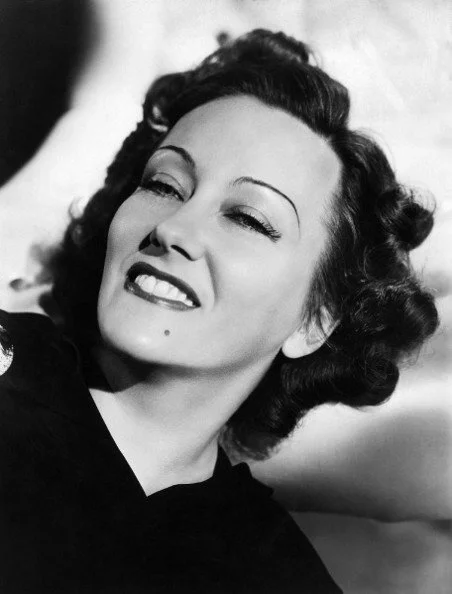
Gloria Swanson, 1941
A poised wartime portrait capturing the elegance she carried into New York’s tense early days of World War II. Just weeks after Pearl Harbor, Swanson dined at the St. Regis during and air‑raid scare, a moment when glamour and uncertainty briefly shared the same room.
Image Public Domain. Gloria Swanson, 1941 studio portrait.
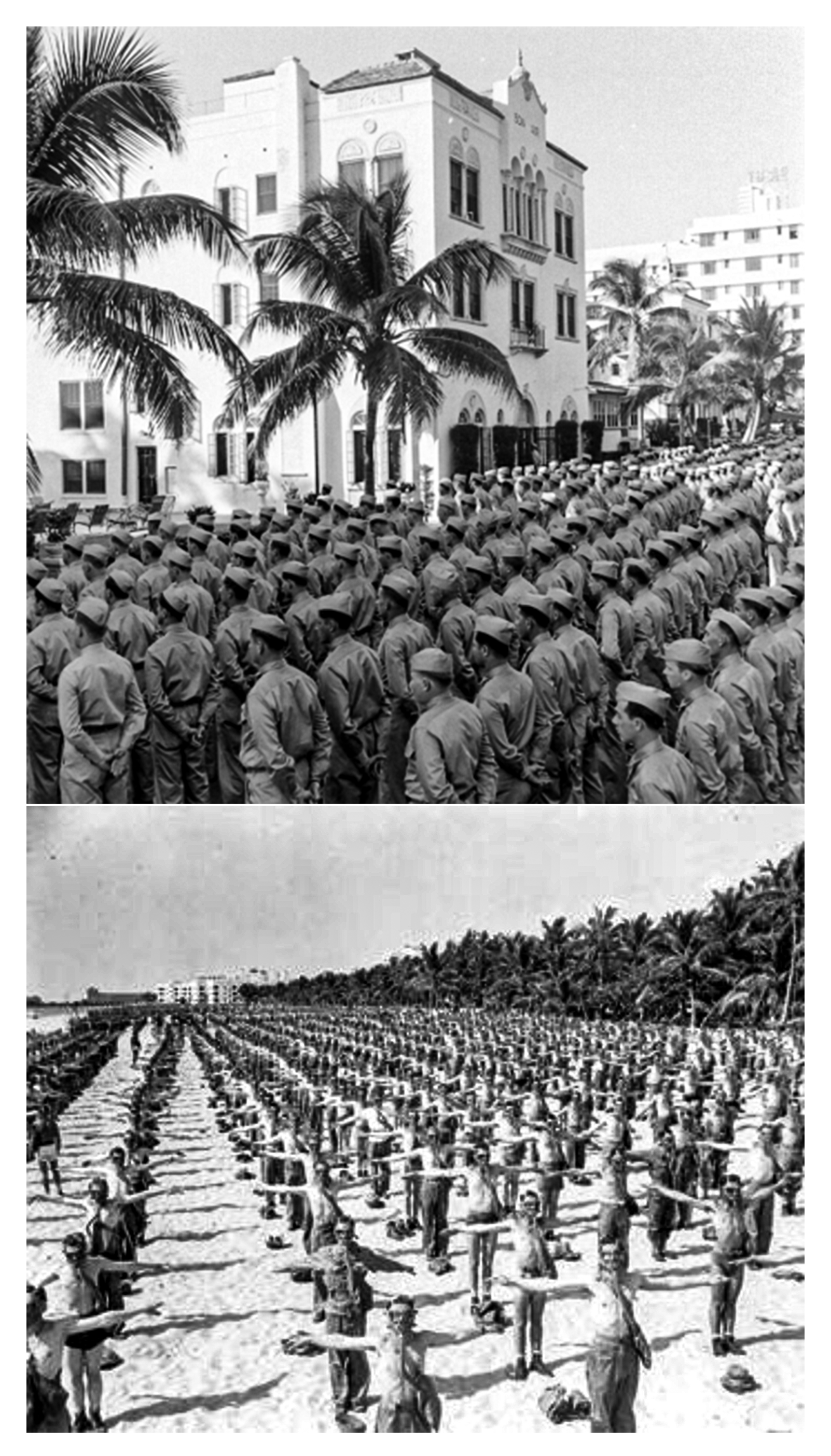
WWII Military Training in Miami Beach (“Camp Miami Beach”)
During World War II, Miami Beach underwent a dramatic transformation as the U.S. Army Air Forces Technical Training Command took over nearly the entire resort city for military use. More than 300 hotels and apartment buildings were requisitioned or leased, turning the famous vacation destination into a major training center for airmen.
By 1942, the military was operating out of almost all of the city’s 332 hotels, converting them into barracks, classrooms, mess halls, and administrative spaces. Soldiers slept in hotel rooms, drilled on the beaches, and attended technical instruction in ballrooms and lobbies that had been repurposed for wartime needs.
The operation quickly became known as “Camp Miami Beach,” a nickname that captured both the scale of the mobilization and the surreal contrast between military discipline and the city’s glamorous backdrop. Some referred to it as “the most beautiful boot camp in America.”
Scale of the Training Effort
Nearly half a million servicemen trained in Miami Beach between 1942 and 1945.
At peak capacity, about 78,000 soldiers were housed in hotel rooms at the same time.
Well‑known figures — including Clark Gable, Hank Greenberg, and Franklin D. Roosevelt Jr. — passed through the program.
Using existing hotel infrastructure saved the government an estimated $6 million in construction costs.
By the end of the war, one‑fourth of all Army Air Force officers and one‑fifth of all enlisted men had received training in Miami Beach.
Sources & Notes
Facts compiled from historical summaries, museum archives, and veteran accounts, including the Museum of Florida History and MiamiBeachVets.com. All information has been paraphrased for clarity and originality. Images courtesy of the U.S. Army Air Forces / National Archives (public domain).
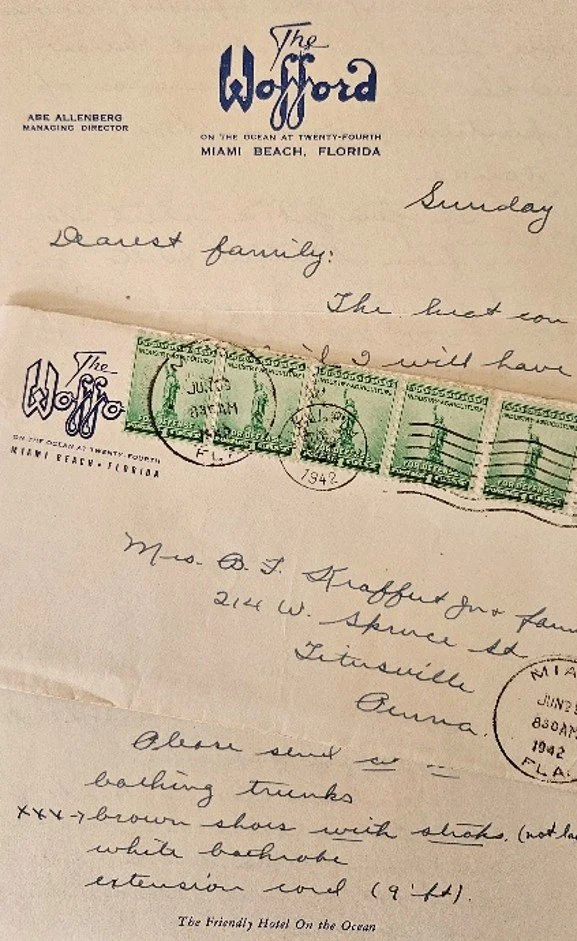
Ben’s letters from the Wofford were brief, steady notes home describing the converted hotel barracks, early‑morning beach drills, gas‑mask training, and the everyday rhythm of Army Air Forces life during “Camp Miami Beach.”
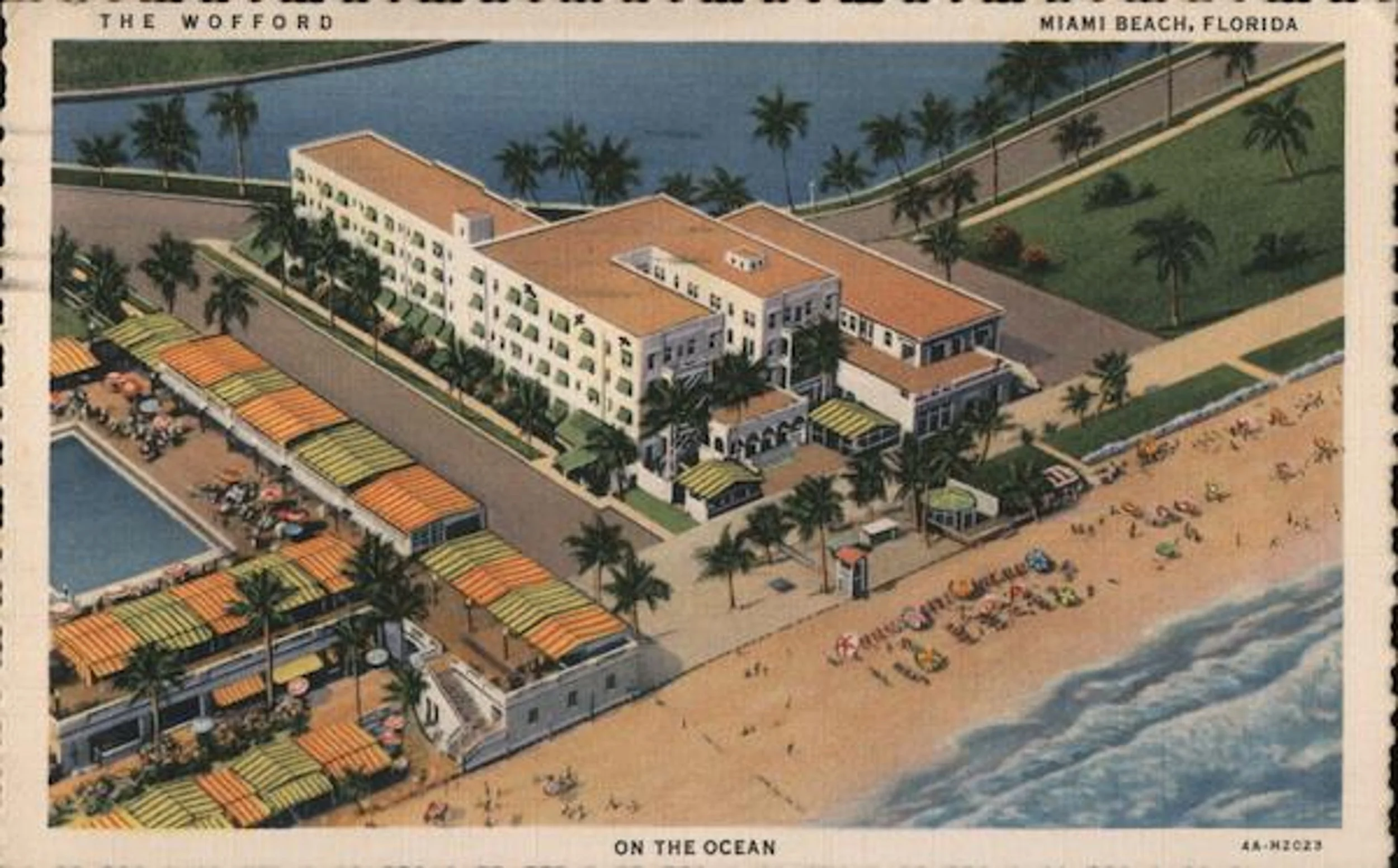
The Wofford Hotel in WWII
The Wofford Hotel at 2400 Collins Avenue had a colorful past long before the Army Air Forces took it over during WWII. In the 1930s and early ’40s, it was known locally as a quiet hangout for small‑time gangsters and bookmakers, a place where back‑room deals mixed with Miami Beach sunshine. When the war began, the Wofford was swept into the city‑wide “Camp Miami Beach” mobilization and converted into housing and administrative space for incoming airmen. After decades of decline, the hotel was condemned in 1973 and demolished the following year; a condominium now stands where gangsters once schemed and soldiers once trained.